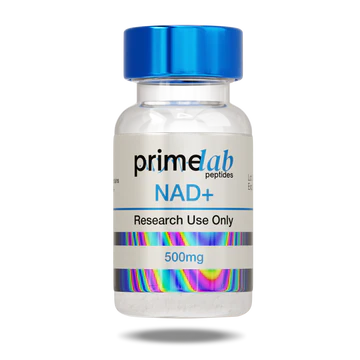
Need reconstitution solution? Don’t forget to add Bacteriostatic Water — available as a quick add in your cart before checkout.
Essential Cellular Coenzyme
The Foundation of Cellular Energy and Repair Research
NAD+ (Nicotinamide Adenine Dinucleotide) is a critical coenzyme involved in over 500 enzymatic reactions throughout the body. Central to cellular energy metabolism, DNA repair, and mitochondrial function, NAD+ has become essential for researchers investigating aging, metabolic health, and cellular resilience. Its levels naturally decline with age, making it a key target for longevity research.
- Essential coenzyme for 500+ enzymatic reactions
- Central role in glycolysis, TCA cycle, and oxidative phosphorylation
- Critical for DNA repair and genomic stability
- Supports mitochondrial biogenesis and function
- High purity (≥98%) for reliable research outcomes
For laboratory research use only. Not for human consumption.

Cellular Mechanisms
How NAD+ Powers Cellular Function and Repair
NAD+ functions as an electron carrier in redox reactions, shuttling electrons through the metabolic pathways that generate ATP — the cell’s energy currency. Beyond energy production, NAD+ serves as a substrate for sirtuins (longevity-associated enzymes), PARPs (DNA repair enzymes), and CD38 (immune signaling). This multi-pathway involvement makes NAD+ central to cellular health research.
- Electron carrier for ATP production pathways
- Substrate for sirtuins (SIRT1-7) — key longevity enzymes
- Required for PARP-mediated DNA repair
- Modulates CD38 and immune cell signaling
- Supports circadian rhythm regulation
For laboratory research use only. Not for human consumption.

Research Applications
From Aging Biology to Metabolic Research — Expanding Frontiers
NAD+ has emerged as a cornerstone of longevity and metabolic research. Scientists use it to investigate age-related cellular decline, mitochondrial dysfunction, and metabolic disorders. Its role in sirtuin activation and DNA repair makes it essential for studies exploring healthspan extension, neuroprotection, and cellular rejuvenation.
- Aging biology and longevity pathway studies
- Mitochondrial function and bioenergetics research
- DNA damage response and genomic stability
- Metabolic health and insulin sensitivity modeling
- Neuroprotection and cognitive function studies
- Sirtuin activation and caloric restriction mimetics
For laboratory research use only. Not for human consumption.

Description
The Science Behind Cellular Vitality: Why NAD+ Is Central to Longevity Research
NAD+ stands at the crossroads of cellular metabolism, repair, and aging. As a coenzyme present in every living cell, it participates in over 500 enzymatic reactions — from energy production to DNA maintenance. This ubiquitous involvement makes NAD+ one of the most studied molecules in longevity science.
The research is clear: cellular NAD+ levels decline significantly with age, correlating with reduced mitochondrial function, impaired DNA repair, and decreased sirtuin activity. This decline is now considered a hallmark of aging, driving intense scientific interest in NAD+ replenishment strategies.
NAD+ serves as the essential substrate for sirtuins — a family of enzymes linked to longevity in multiple species. It’s also required for PARPs, the enzymes responsible for detecting and repairing DNA damage. Without adequate NAD+, these critical cellular maintenance systems cannot function optimally.
For research teams investigating aging mechanisms, metabolic health, or cellular resilience, NAD+ provides the foundational tool for exploring how cells maintain function over time. Its well-characterized biochemistry and central role in cellular physiology make it indispensable for modern biomedical research.
For research use only. Not for human consumption.